
Starfield: The $400 Million Question Bethesda Still Can’t Answer
How the most expensive RPG ever made became the industry’s most instructive cautionary tale
Feature | The Atomic Friends Show | March 2026
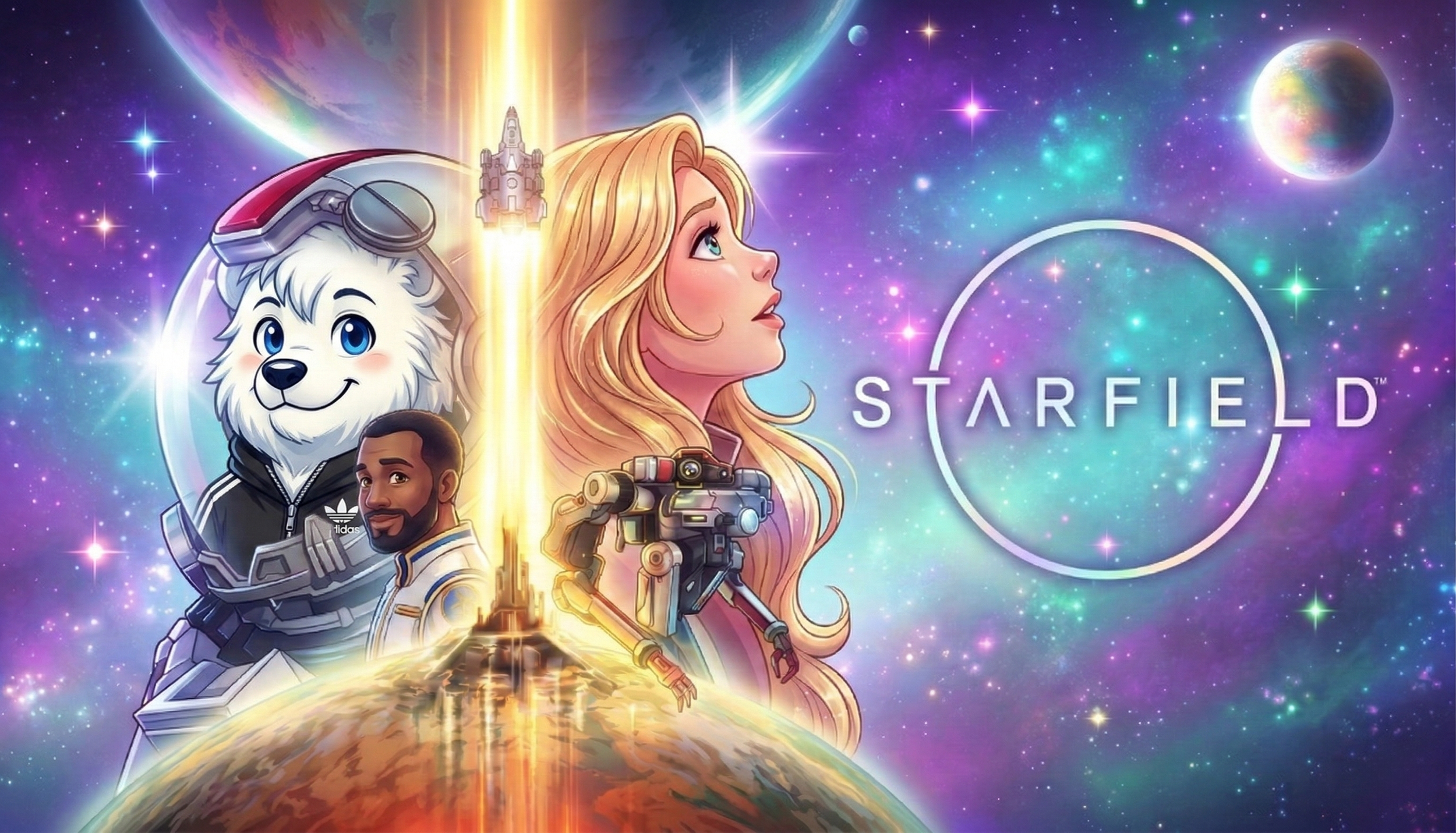
Two and a half years after launch, Starfield is the game nobody can stop arguing about. Not because the arguments are particularly interesting anymore, but because the game itself resists easy categorization. It is simultaneously one of the most polished products Bethesda has ever shipped and one of the most structurally confused. It sold brilliantly by every available metric and disappointed millions of the people who played it. It cost, by credible estimates, around $400 million to make. And it might be the single most important case study in why that number should terrify everyone who cares about the future of big-budget games.
So let’s talk about what happened.
The Biggest Bet in Bethesda’s History
Starfield was never just a game. It was an answer to a question Bethesda had been asking itself for decades: what would a Todd Howard RPG look like in space? Howard himself has described the project as a long-standing passion, something the studio wanted to build since before Morrowind was a household name among RPG fans. Active development kicked off in late 2015, right after Fallout 4 shipped, and the team spent years retooling their engine before Bethesda even showed a teaser trailer at E3 2018.
Then Microsoft changed the equation entirely. In September 2020, Microsoft acquired ZeniMax Media (Bethesda’s parent company) for $7.5 billion in cash. Overnight, Starfield went from a likely multi-platform release to the crown jewel of Xbox’s ecosystem strategy. It became an Xbox console exclusive and a day-one Game Pass title.
That shift redefined what “success” even meant for the project. Phil Spencer, Microsoft’s gaming CEO, was candid that Starfield wasn’t built to live or die on unit sales alone. It was an ecosystem play: get people subscribed to Game Pass, keep them there, sell them on the Xbox platform. By that metric, it worked. Microsoft’s CFO, Amy Hood, confirmed that Starfield’s launch drove the most Game Pass subscriptions added in a single day in the service’s history, pushing a 13% year-over-year revenue bump for the Xbox content division in Q1 of their fiscal year.
The price tag to get there? Reportedly $400 million across seven-plus years of development and a team of over 500 people, according to Bloomberg’s Jason Schreier. That makes Starfield one of the most expensive entertainment products ever created, full stop.

“It’s like Skyrim in space” - Todd Howard
Building a Universe on Duct Tape and Ambition
The aesthetic identity Bethesda established for Starfield is genuinely one of its strongest contributions. The art team coined the term “NASApunk” to describe the visual philosophy: everything should look like a plausible, utilitarian extension of real aerospace engineering. Spacecraft aren’t sleek sci-fi daggers; they’re chunky, modular workhorses bolted together from mismatched manufacturer parts. Spacesuits have visible stitching and scuffed plastic faceplates. Weapons look like they were designed by people who read too many Jane’s Defence catalogues.
Art Director Istvan Pely’s team built that identity on top of Creation Engine 2, Bethesda’s ground-up overhaul of their proprietary tech. And to their credit, the material rendering in Starfield is superb. Digital Foundry’s technical analysis highlighted the engine’s physically-based materials pipeline, which renders surfaces like brushed metal, degraded plastics, and woven spacesuit fabrics with a tactile quality that few open-world games match. The engine also introduced advanced volumetric effects; height fog fills planetary valleys and interacts with environmental lighting in ways that genuinely shape how a planet feels to walk across.
Then there’s item persistence, the nerdiest flex in Bethesda’s entire portfolio. The engine tracks the physical state and location of thousands of individual objects across the galaxy. Technical reviewers demonstrated that you could drop a sandwich on a remote moon, fly to a different star system, complete hours of quests, come back, and the sandwich would be right where you left it. It is a staggering engineering achievement that most players will never consciously notice, and that’s sort of the perfect metaphor for how Starfield’s technical priorities sometimes missed the forest for the trees.
The Compromises Nobody Wanted
All that systemic complexity came at a cost, and the bill arrived in the form of loading screens. The engine’s architecture could not support a seamless, unified universe. Every transition (surface to building, orbit to landing zone, system to system) triggers a discrete loading interruption. For a game marketing over 1,000 explorable planets and the freedom of the stars, the moment-to-moment experience felt paradoxically boxed in.
Reflection rendering relied on static cube maps instead of modern screen-space or ray-traced solutions, creating occasional visual weirdness in complex lighting. On consoles, the interlocking physics and AI systems forced a rigid 30fps cap on Xbox Series X and Series S at launch, prioritizing systemic consistency over graphical smoothness. And the procedural generation tech, while impressive in its underlying mechanics, produced a homogenizing effect: land on enough planets and you start recognizing the same abandoned outpost layout, the same pirate base configuration, the same arrangement of rocks around a cave entrance.
The Game That Could Have Been
Some of the most fascinating details about Starfield involve what didn’t make it into the final product. Todd Howard revealed in post-launch interviews (including a detailed IGN feature on cut content) that early builds were far more punishing than anything that shipped.
The original fuel system was brutal. Players had to calculate jump distances and manage fuel reserves, and if they miscalculated, they could become permanently stranded in deep space. No rescue mechanic, no safety net. Internal playtesting showed that while this added realism, it constantly interrupted the exploration loop and punished the exact behavior the game was supposed to encourage. The system got nerfed into a soft limiter on fast-travel distance, removing all genuine risk.
Environmental hazards followed the same arc. Radiation, toxic atmospheres, thermal extremes: all were originally designed to be highly lethal, demanding that players customize spacesuits for specific planetary conditions. By launch, these systems felt vestigial, present in the UI but rarely threatening enough to change player behavior.
The most divisive cut was atmospheric flight. Starfield restricts manual flight to orbital dogfighting. Landing on a planet’s surface plays out as a non-interactive cutscene. Bethesda’s reasoning was practical: it let them control the rendering pipeline and mask the loading required to generate terrain tiles. For players who expected seamless space-to-ground transitions (the kind No Man’s Sky had been delivering for years), the omission felt like a dealbreaker.
The Bethesda Formula, Now With Jetpacks
Strip away the space setting, and Starfield’s core loop is recognizably Bethesda. Accept quests, explore environments, loot everything that isn’t nailed down, level up, repeat. The game splits its time between densely packed, hand-crafted urban hubs (New Atlantis, Akila City, the neon-drenched cyberpunk city literally called Neon) and those vast procedural planetary surfaces.
Where the formula genuinely evolved is combat. Ground firefights iterate heavily on Fallout 4’s framework but feel meaningfully tighter. The addition of Boost Packs (jetpacks, essentially) introduces real verticality, and zero-gravity environments create firefights where the kickback from a ballistic rifle sends you drifting backward through a space station corridor. It’s the kind of emergent physics-driven chaos Bethesda games have always been good at.
Space combat runs on a distinct power-management system that asks players to dynamically allocate reactor output among engines, shields, gravity drives, and weapons. Disabling specific enemy systems lets you dock and board hostile ships, which is enormously satisfying and remains one of the game’s best-kept secrets for people who bounced off the main quest early.
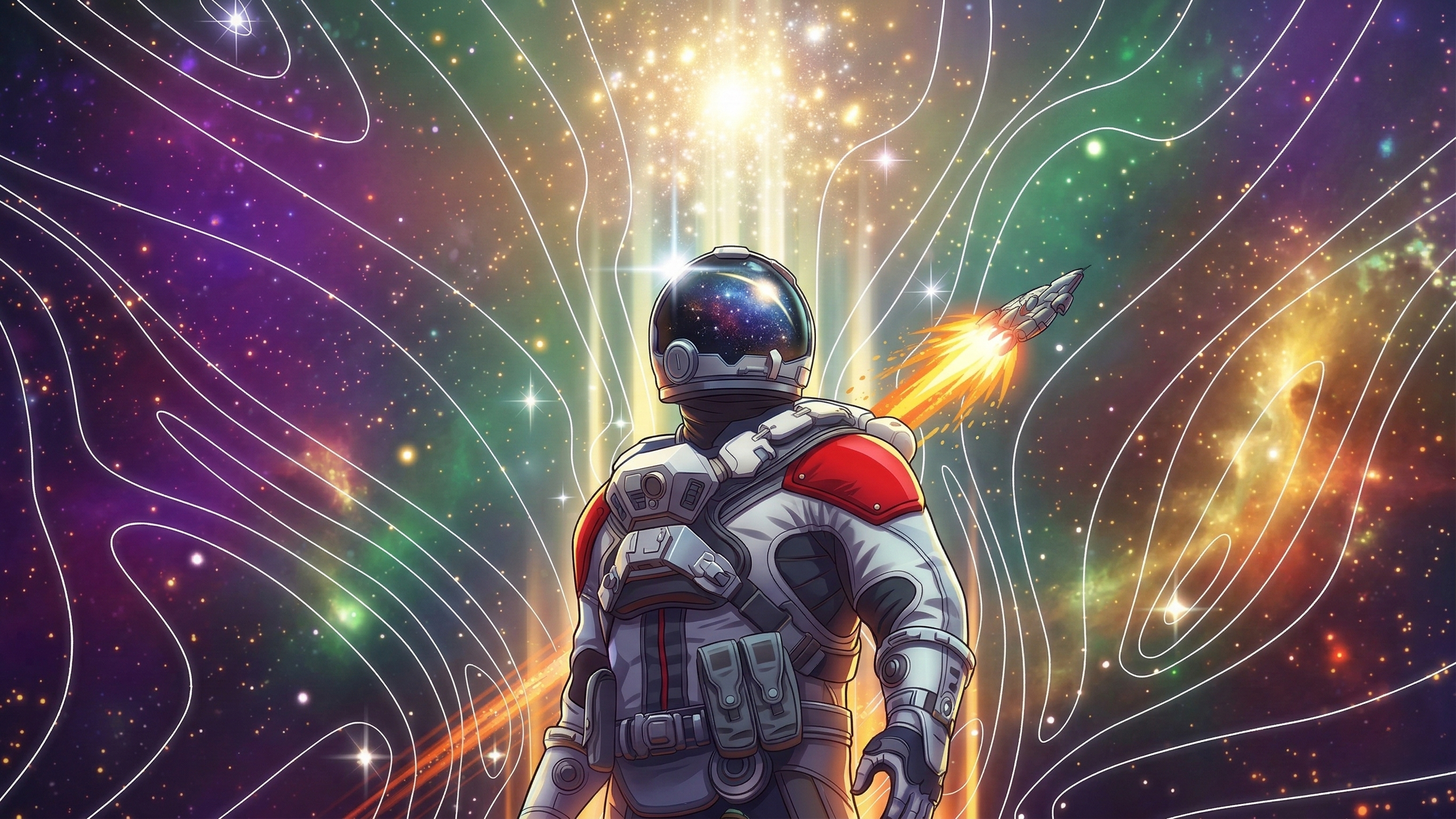
“Land on enough planets and you start recognizing the same abandoned outpost, the same pirate base, the same arrangement of rocks around a cave entrance.”
The ship builder is the real star. Starfield’s modular construction system lets players snap together structural components, hab modules, reactors, and weapons from different in-game manufacturers, and those choices affect everything: the ship’s silhouette, its interior walkable spaces, cargo capacity, and combat viability. It’s a system deep enough to lose entire evenings to, and the community has produced some genuinely absurd creations.
The skill system deserves special mention for its challenge-gating mechanic. You can’t just pour points into a skill and max it out. Unlocking the next rank requires completing specific gameplay challenges (pick a certain number of locks, land a quota of stealth kills, persuade enough NPCs). It’s a clever incentive to actually engage with the systems you’re investing in, though it occasionally forces you into grinding activities you’d rather skip.
The Narrative Problem
Set in 2330, Starfield’s story drops you into the “Settled Systems,” a human-colonized stretch of the Milky Way still scarred by a conflict called the Colony War. Your character, a miner, uncovers a mysterious alien Artifact that induces a metaphysical vision, catches the attention of a group of explorers called Constellation, and spends the rest of the game chasing more Artifacts across the galaxy while tangling with interdimensional entities called the Starborn.
On paper, that’s fine. In practice, the main story was widely considered the weakest pillar of the experience. The Constellation companions (Sarah Morgan, Barrett, Sam Coe, Andreja) are likable but lack the moral edge and unpredictability that made characters in Fallout: New Vegas or even Skyrim memorable. They’re earnest, well-meaning, and not terribly interesting. The faction quests, particularly the UC Vanguard line and the Ryujin Industries corporate espionage arc, picked up much of the narrative slack. Critics consistently pointed to these as showcasing some of Bethesda’s best writing and branching quest design in years.
The New Game Plus integration is worth highlighting. Completing the main story sends players into “The Unity,” a metaphysical nexus that lets them restart in an alternate universe. You keep your skills and powers but lose all possessions, and subsequent playthroughs feature randomized alterations to the cast. It’s a clever narrative framing for what could have been a purely mechanical feature.
An 85 That Felt Like a 65
Starfield landed at an 85 on Metacritic (PC) and 83 on Xbox Series X. OpenCritic had it at 85, with 83% of critics recommending. Those are good scores by any reasonable standard. They also felt wildly disconnected from the conversation happening around the game.
The critical consensus was a study in contradictions. IGN’s Dan Stapleton gave it a 7/10, praising the faction quests and space combat while noting a “disjointed, slow-starting exploration system.” GameSpot’s Michael Higham, also at 7/10, called it “a mile wide and an inch deep.” PC Gamer’s Christopher Livingston scored it 75/100, observing that the game shares DNA with Skyrim and Fallout 4 but falls short of both. Eurogamer’s Chris Tapsell, at 3/5, zeroed in on the sacrifice of direct exploration for menu-driven fast travel. Kotaku’s Claire Jackson, reviewing it unscored, described it as “a jack of all trades and master of none.”
On the other end, Fextralife handed it a 9.4/10, calling it an instant classic. Game Informer gave it 8.5/10. The spread told you everything about where critics stood on the fundamental question: is the Bethesda formula, transported to space and scaled to 1,000 planets, still compelling? For some, the breadth was the point. For others, breadth without density was the problem.
The Player Backlash
Player sentiment started enthusiastic and eroded fast. Steam reviews launched at “Very Positive” before sliding to “Mixed” within months. The complaints tracked with the critical consensus (loading screens, repetitive POIs, no seamless exploration), but the community reaction intensified dramatically around monetization. Bethesda’s “Creations” storefront reintroduced paid mods, and the inclusion of a $7 bounty hunting quest called “The Vulture” drew immediate comparisons to the infamous Oblivion horse armor debacle. Review-bombing campaigns hit both Steam and Metacritic.
The Shattered Space DLC, released September 30, 2024, made things worse. Priced at $30, the expansion abandoned procedural generation for a single hand-crafted planet called Va’ruun’kai, centered on the theocratic House Va’ruun and leaning into cosmic horror themes. Critics appreciated the focused design but hammered it for introducing zero new mechanics, no new skills, and no new ship components. It landed at a 62 on Metacritic and “Mostly Negative” on Steam, with a user score of 4.9. Players pointed to CD Projekt Red’s Phantom Liberty as the gold standard for what a premium expansion should deliver, and Shattered Space suffered brutally from the comparison.
Bethesda’s Course Correction
To their credit, Bethesda didn’t ignore the feedback. The 2024 update cycle was aggressive and often directly responsive to community criticism.
The May 2024 patch was the biggest single improvement. It replaced the vague, dot-based surface maps with detailed 3D topographical maps, introduced granular difficulty toggles (letting players adjust vendor credits, carry capacity, and combat lethality), and optionally reintroduced the cut survival mechanics: hunger, thirst, and punishing environmental afflictions. For console players, it unlocked 60fps and uncapped framerate modes on Xbox Series X. In August, Bethesda added the REV-8, a drivable land rover with jump boosters and a mounted turret, directly addressing the tedium of on-foot planetary traversal.
These weren’t cosmetic patches. They were fundamental quality-of-life overhauls that acknowledged real structural weaknesses. The game that exists in March 2026 is meaningfully better than what shipped in September 2023. The question is whether those improvements came too late to shift the narrative.
3,000 Concurrent, 120 Million Downloads
By the numbers, Starfield followed the trajectory you’d expect from a massive single-player RPG. It launched to over 330,000 concurrent players on Steam and surpassed 14 million total players globally. By March 2026, Steam concurrents hover around 3,000. That drop sounds dramatic out of context, but it’s typical for the genre, and the Steam figures don’t account for Xbox console and Windows Store players (where the game launched on Game Pass).
The real story is the modding community. Following the release of the official Creation Kit in June 2024, the scene took off. By early 2026, Starfield hosts over 12,000 unique mods on Nexus Mods, totaling more than 121.8 million downloads. That volume pushed it past Monster Hunter World and Mount & Blade II: Bannerlord to become the 11th most downloaded game in Nexus Mods history.
Popular mods focus on quality-of-life fixes, UI overhauls (StarUI is practically mandatory), performance optimization, and ambitious total conversion projects inserting Star Wars and Star Trek assets into the game. Bethesda RPGs have always aged on the strength of their modding communities, and Starfield appears to be following that same long-tail pattern.
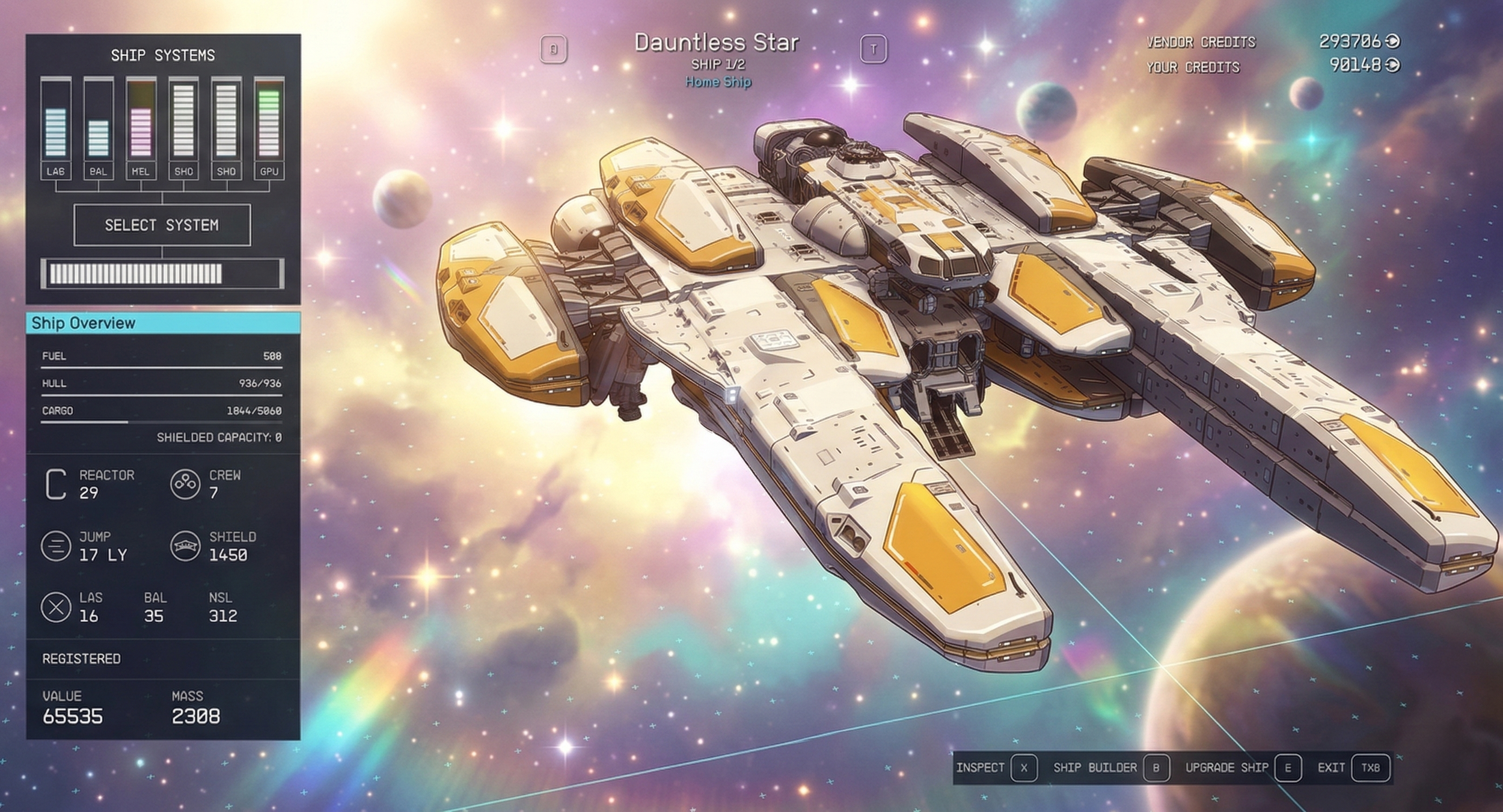
The shipbuilding mechanic is one of the highlights of Starfield.
Hidden Gems Worth Finding
One thing Bethesda has always excelled at is burying Easter eggs deep enough to reward the obsessive player, and Starfield is loaded with them.
Every planet and moon in the Alpha Centauri system is named after a real historical figure who advanced space exploration: Yuri Gagarin, Roberta Bondar, Kalpana Chawla, Mae Carol Jemison. It’s a small touch that reinforces the NASApunk ethos. On a more emotional note, a poignant item called “Alex Hay’s Note” sits aboard the orbital station known as The Eye. Bethesda added it as a memorial to a real fan who followed the game’s development closely but passed away from lung cancer months before launch.
The callback game is strong, too. Selecting the “Hero Worshipped” trait in character creation sticks you with an obsessive NPC follower voiced by Craig Sechler, reprising his role as the infamous Adoring Fan from The Elder Scrolls IV: Oblivion. The “Crippling” skill icon is an X-ray of a knee pierced by a projectile: a sly nod to Skyrim’s most inescapable meme. You can visit NASA’s Opportunity rover on Mars. And the “Mantis” side quest, where you discover a deceased vigilante’s hidden high-tech lair beneath a planet’s surface, is a clear Batman homage that rewards you with a Batmobile-esque ship called the Razorleaf.
Perhaps the best deep cut: during a Neon quest involving the manufacture of a fictional narcotic called “Aurora,” the game hands you a yellow hazmat suit that is a dead ringer for Walter White’s cooking outfit from Breaking Bad. That’s the kind of detail that makes you forgive a loading screen or two.
What Starfield Actually Means
Here’s the uncomfortable truth: Starfield is probably the most important game of 2023, and not for the reasons Bethesda wanted.
It is the single clearest illustration of the crisis facing AAA game development. A reported $400 million budget. Seven years of production. Over 500 developers. And the final product, while profitable within the Game Pass ecosystem, failed to become the cultural phenomenon that Skyrim was or that Microsoft clearly hoped it would be. Starfield hasn’t penetrated mainstream pop culture the way its predecessors did. Its primary legacy in the meme economy is loading screen jokes and NPC facial animations.
Jason Schreier’s Bloomberg reporting uses Starfield as a primary case study for a broader argument: the cost of creating massive, fidelity-chasing blockbusters has outpaced the ability to reliably recoup that investment. The budgets keep climbing. The standard retail price sits at $70. Something has to give, and Starfield is the game that makes that math impossible to ignore.
Within Bethesda’s own catalog, Starfield sits in an awkward position. Its shooting mechanics and material rendering are the best the studio has ever produced. Its world design and sense of exploration are arguably the weakest. It’s a mechanical evolution built inside a holistic regression. The Bethesda Formula, which relies on density, surprise, and the joy of wandering into the unexpected, doesn’t scale gracefully to 1,000 procedurally generated planets connected by menus.
The game won Xbox Game of the Year at the Golden Joysticks. It won Most Innovative Gameplay at the Steam Awards (which, yes, sparked furious debate from players who considered menu-driven navigation the opposite of innovation). It picked up BAFTA and D.I.C.E. nominations. None of those accolades changed the conversation. Starfield remains, in the cultural memory, the game that proved bigger isn’t always better, and that 1,000 planets is only as good as the reason you have to visit them.
Bethesda has committed to a 10-year support plan. The modding community is 120 million downloads strong and growing. Creation Engine 2 is the foundation on which The Elder Scrolls VI will be built. In that sense, Starfield isn’t the end of anything. It’s the most expensive lesson Bethesda has ever learned, and the industry will be processing what it means for years.
Play it for the faction quests and the ship builder. Stay for the mods. Just don’t expect the stars to feel as big as they look.
