
Cameron's Coffee Breakfast Blend Review: Always Smooth?
Finding the Best Budget Light Roast at the Grocery Store
Feature | Coffee After Midnight | February 2026
In 1978, Janie and Jim Cameron couldn't find a decent bag of coffee within a hundred miles of their home in rural Wisconsin. Not specialty coffee. Not single-origin micro-lot pour-over coffee. Just good coffee. The kind that didn't taste like it had been sitting in a warehouse since the Ford administration. So Jim started roasting his own, and by 1980, Cameron's Coffee had a small facility in Hayward, Wisconsin, and a mission that still anchors the brand today: get better beans into regular grocery stores at prices regular people will actually pay.
Forty-six years later, Cameron's is in over 12,000 retail locations. The company is owned by a Colombian food conglomerate worth billions. And the Breakfast Blend, one of its oldest and most popular offerings, is still doing exactly what the founders set out to do. Whether that's enough depends on what you're looking for in a cup.
From Small-Town Roaster to Multinational Subsidiary
Cameron's story follows a trajectory that's become familiar in the specialty food world: scrappy regional brand builds a loyal following, private equity takes notice, global corporation writes the check. The founders opened their only retail coffee shop in 1981 and, by 1982, had pivoted entirely toward grocery distribution after landing a deal with Byerly's, a chain of upscale Midwest supermarkets. The cafe model was dead. The CPG model was the future.
Entrepreneur Bill Kirkpatrick acquired the company in 1993 and invested heavily in manufacturing infrastructure. By 2008, operations had relocated from tiny Hayward to a purpose-built facility in Shakopee, Minnesota, which has been expanded twice since. A private equity firm, Goldner Hawn, bought the company in 2014 and modernized the branding. Then came the big move.
In September 2019, Grupo Nutresa S.A., Colombia's largest processed food company (roughly 70 brands across 65 countries), acquired Cameron's for $113 million. At the time of the sale, Cameron's was pulling in $72 million in gross annual sales. Grupo Nutresa's CEO framed the acquisition as a calculated entry into the American retail coffee market, and the parent company's financial filings through 2025 confirm it's still operating Cameron's as a profitable subsidiary. The existing management team stayed on, which matters: it means the people who understand the Midwest consumer are still making the day-to-day calls, now with access to a multinational supply chain.
For shoppers, none of this corporate genealogy changes what's in the bag. But it does explain how a brand born in rural Wisconsin can maintain consistent quality across 12,000 stores while keeping prices below most boutique competitors.
What's Actually in the Bag
The Breakfast Blend is Cameron's flagship light roast, and it sits at the absolute lightest point on the brand's internal roast scale. Every bean is 100% Specialty Grade Arabica, sourced from Central and South American origins. No robusta fillers. The specific farms and varietals rotate with the seasons (a standard practice among large-scale specialty roasters that allows for year-round flavor consistency), so you're not going to find a traceable lot number on the label. This is a blend, designed to taste the same in January as it does in July.
Cameron's official tasting notes call it a "mild, yet rich flavor" with low sweetness and mild intensity. That's the marketing language. The more interesting story is the roasting process itself.
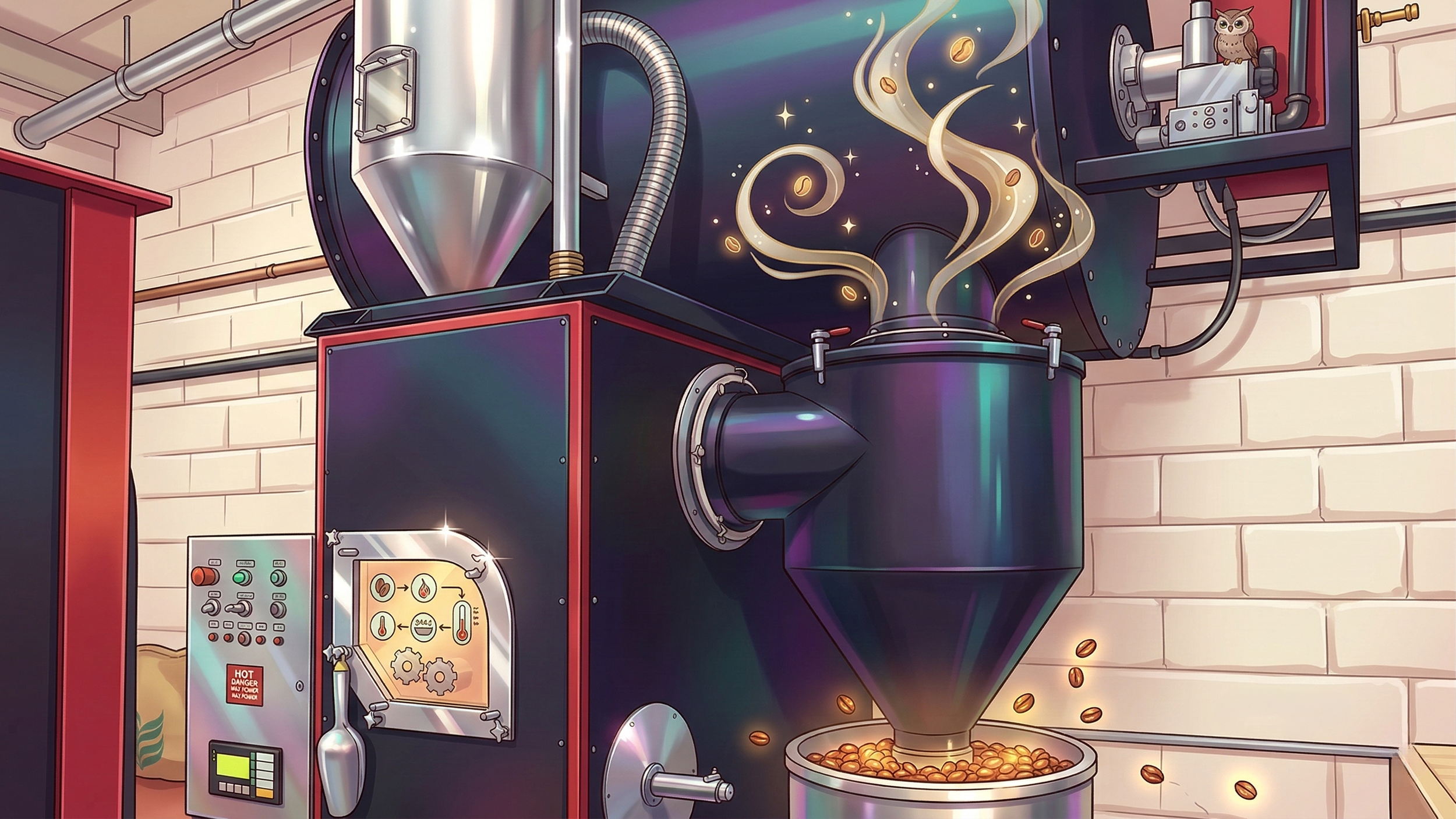
The company uses a method they call Precision Air Roasting, which is fluid-bed technology rather than the traditional drum roasting used by the vast majority of commercial operations. In drum roasting, beans tumble inside a heated steel cylinder and make direct contact with hot metal. That contact can cause localized scorching, and as the beans shed their outer chaff during roasting, that chaff can burn inside the drum and impart smoky or ashy notes into the final product.
Air roasting suspends the beans in a vortex of superheated air, heating each one evenly without any metal contact. The high-velocity air stream also strips the chaff away the moment it separates, so it never gets a chance to carbonize. The result, in theory and largely in practice, is a cleaner light roast with fewer bitter byproducts. It's the core technology behind Cameron's entire brand promise: "Always Smooth, Never Bitter."
What Buyers Are Actually Saying
Consumer reception for the Breakfast Blend is strong across every major retail platform where reviews are tracked. The numbers:
Sam's Club: 4.7 out of 5 (315 reviews). Target: 4.6 out of 5 (66 reviews). Trustpilot (brand overall): 4.0 out of 5. Walmart lists it as "Highly Rated" without publishing a specific aggregate score. Those are consistently above-average marks, especially considering the volume of reviews at Sam's Club.
The recurring praise across all platforms centers on two things: smoothness and the absence of bitterness. That might sound like table stakes, but for a light roast at this price point, it's actually notable. Cheap light roasts are infamous for tasting sharp, acidic, and thin. Reviewers describe the Breakfast Blend as gentle on the stomach and good enough to drink black, no cream or sugar needed to mask anything. Budget-conscious buyers consistently point out that it performs well above its price bracket.
Complaints are sparse. The ones that do surface fall into two predictable categories. First, dark roast loyalists who find the mild profile too subtle for their preferences, which is less a flaw in the coffee and more a mismatch in expectations. Second, rare quality control outliers: one reviewer described a bag that tasted "burnt," which would be a significant deviation from the air-roasting standard and likely represents an anomaly rather than a pattern.
The Specialty Score Question
Cameron's internal quality assurance protocol is more rigorous than most consumers probably realize. Before any shipment of green coffee leaves its origin country, the company pulls a pre-shipment sample, roasts it in a lab, and cups it to verify it meets a minimum score of 80 on the Specialty Coffee Association's 100-point scale (anything below 79 is classified as commodity grade). When the full shipment arrives in Shakopee, they pull a second sample and cup it again to check for degradation during transit. They also archive bags from every sold batch so they can retroactively test if a customer complaint arises.
That said, there are no published independent cupping scores for the Breakfast Blend from organizations like Coffee Review. That's not unusual for a commercial blend at this tier. Coffee Review tends to focus on elite single-origin micro-lots, frequently scoring in the 88 to 96 range for exotic, high-acid coffees. Industry professionals generally place approachable washed blends like Cameron's in the 80 to 85 point range: defect-free, consistent, and exactly what they're supposed to be. Not the kind of coffee that wins awards, but the kind that reliably delivers every morning without any unpleasant surprises.
Trade coverage of Cameron's from outlets like Daily Coffee News and Tea & Coffee Trade Journal focuses almost entirely on the business side: the Nutresa acquisition, the Haberman marketing campaign, the company's growth metrics. Nobody in the trade press is writing tasting notes about the Breakfast Blend, because that's not the story. The story is how a small-town roaster became a $113 million acquisition target while selling coffee at Walmart.
The Price-to-Quality Equation
Cameron's positions itself in what the industry calls the "accessible premium" or "specialty-lite" tier. The pricing breaks down like this: a standard 10 to 12 oz bag runs about $10.99 (often discounted), a 32 oz bag is around $20.49 (frequently $19.97 at Walmart), and a 4-pound bulk bag hits $41.49. In single-serve, you can get 12-count, 24-count, or 100-count EcoPod boxes.
When you do the math, you're looking at roughly $0.62 per ounce or less in bulk. For context, boutique craft roasters routinely charge $1.50 to $3.00 or more per ounce. Cameron's is firmly below that threshold while sitting comfortably above commodity-grade supermarket brands. For a household that burns through coffee at a steady clip, the value proposition is hard to argue with.
The Coffee After Midnight Take
Cameron's Breakfast Blend is not trying to be the most interesting coffee you've ever tasted. It's not going to surprise you with notes of blood orange and honeysuckle. It's not fermented in an oak barrel or processed in some experimental way that sounds like a chemistry experiment. And that, frankly, is the point.
What Cameron's has done, for over four decades, is solve a specific problem: how do you get a clean, smooth, specialty-grade light roast into the hands of people who shop at Target and Costco, at a price that doesn't make them feel guilty about their grocery bill? The air roasting technology isn't just marketing fluff. Reviewers consistently confirm the smoothness claim, and the near-total absence of bitterness in a light roast at this price point is a genuine achievement, not a participation trophy.
The Breakfast Blend is best suited for daily drinkers who want reliability over excitement. People who brew a pot every morning and want it to taste good without requiring a grinder, a scale, a gooseneck kettle, and a 45-minute ritual. If you're the kind of person who geeks out over processing methods and terroir, this won't scratch that itch. But if you've been buying Folgers or Maxwell House and you're ready to take one step up without remortgaging the house, Cameron's is one of the best on-ramps available.
Still. Open the bag. Brew a cup. Drink it black. If it's smooth and clean and does exactly what it says on the label? That counts for a lot more than most coffee brands can honestly claim.
Coffee After Midnight covers coffee, movies, and shows. Find our full video reviews on YouTube.
